Streaming TV Ads vs. Facebook Ads (We Ran Both)
By Ian McCue ·
Before Trusted TV existed, our team spent years running Facebook and Instagram ads for local businesses. We ran a lot of them, and we know the platform inside and out. So when we started putting those same types of businesses on streaming TV too, we had a real baseline to compare against. Not theory. Not a vendor's sales deck. Actual campaigns, actual numbers, same kinds of businesses.
This post is the honest comparison. We're not going to pretend streaming TV is better at everything. It isn't. Facebook isn't better at everything either. They do different jobs. The question is which job you need done right now, and whether you should use one, the other, or both.
Why compare them at all?
Most local businesses have a limited budget. Maybe $500 to $1,000 a month for advertising. They can't run five channels at once. So the real question they're asking is: where should my next dollar go?
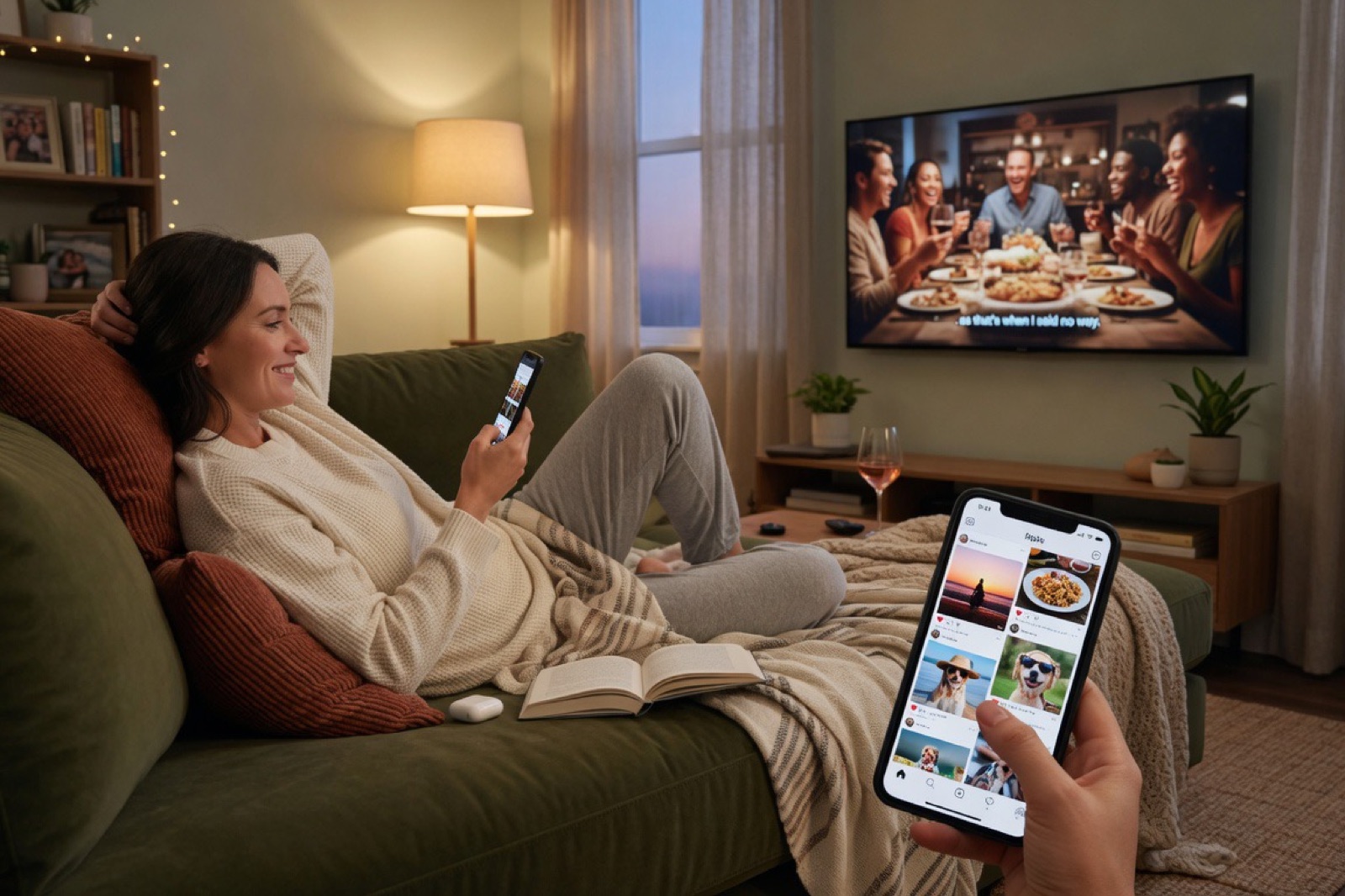
Facebook (and Instagram, same ad platform) has been the default answer for a decade. It's self-serve, the targeting is good, and you can start for almost nothing. But the experience for the person seeing your ad has changed. Feeds are crowded. People scroll fast. Video autoplay is muted by default. Your beautifully crafted 30-second spot gets three seconds of half-attention wedged between a meme and someone's vacation photos.
Streaming TV is different. Your ad plays full-screen, with sound, and it's non-skippable. The viewer is leaned back on the couch watching a show they chose. That's a fundamentally different moment of attention. The tradeoff? You can't put a "Shop Now" button on a TV screen the way you can in a feed. Different strengths. Let's get into the numbers.
The side-by-side: what we actually saw
We compared our streaming TV platform data against results from comparable local-business campaigns our team previously managed on Meta (Facebook and Instagram). Same types of businesses. Service-area locals. Similar budgets. Here's what the numbers look like.
Streaming TV (Trusted TV platform data, 2026)
Budget: $25/day (median). Views per four-week campaign: about 9,100. Unique people reached: about 5,900. All-in CPM: about $42.50 per 1,000 views (includes free commercial and management). Every view is a non-skippable, full-screen ad, built for attention rather than an immediate click.
Facebook/Instagram (for comparison)
Comparable local budgets. Meta's impression CPMs are typically lower than streaming TV, and Meta is the click machine: across the Meta campaigns on our platform, video runs about a 3.39% click-through rate. But a Meta "video view" can count at just 3 seconds, often muted, in a scrollable feed, so a low CPM buys a very different kind of attention. The honest summary: Facebook wins the click, streaming TV wins the minute of real, full-screen attention.
Trusted TV platform data, 2026. Streaming figures are medians; the Meta click-through rate is measured across the Meta campaigns on our platform.
A few things jump out of that comparison.
Cost per result: it depends on which result
If the result you care about is "an impression happened," Facebook wins on price. You can get eyeballs in a feed for $15 CPM all day. But what kind of eyeball? A thumb swiping past a muted autoplay clip is not the same as someone watching your entire 30-second commercial on their living room TV with the sound on.
The Trusted TV CPM of about $42.50 per 1,000 views includes everything. The commercial we make for free. The campaign management. The media. There's no production invoice and no agency fee on top. The number you see is the number you pay.
When you compare cost per completed, full-attention view, the gap narrows a lot. And for a local business trying to become a known name in its area, a completed view on a TV screen is worth more than a scroll-past in a feed. Not always. But usually.
Reach and attention: the real difference
This is where the two channels diverge most.
- Streaming TV: non-skippable, full-screen, sound on. The viewer chose to sit down and watch a show. Your ad plays as part of that experience. The median Trusted TV campaign reaches about 5,900 unique people in four weeks, and every one of those people watched your full message. That's real attention.
- Facebook/Instagram: skippable, in-feed, often muted. Reach can be higher for the same budget because impressions are cheaper. But "reached" on Meta means the ad appeared in someone's feed. It does not mean they stopped scrolling. It does not mean the sound was on. It does not mean they watched more than a flash.
Think about it from the viewer's perspective. On streaming TV, your ad looks like a real commercial because it is one. On Facebook, your ad looks like another post fighting for a fraction of a second of attention. Both formats have a place. But they produce different kinds of awareness.
For more on how the streaming side works under the hood, see our breakdown of how Prime Video ads work.
When to use which
Here's our honest take, having run both for years.
Streaming TV is better when:
- You want to build brand awareness in a specific local area. ZIP-code targeting with a median 10-mile radius means you're only paying for households that could actually become customers.
- You want the credibility of a real TV commercial. There's a reason "As Seen on TV" still carries weight. Showing up on Prime Video next to major shows signals legitimacy in a way a Facebook ad doesn't.
- You want full attention. Non-skippable means your whole message gets delivered.
- You don't have a video yet. Our AI builds you a real commercial for free, in minutes.
Facebook/Instagram is better when:
- You need direct-response clicks right now. A "Book Now" button in the feed, a lead form, a swipe-up. Meta's ad units are built for immediate action.
- You're retargeting people who already visited your website or engaged with your content. Meta's pixel and custom audiences are very good at this.
- You have strong visual creative that works in a feed format (static images, short clips, carousels).
- Your budget is extremely small, under $300 a month, and you need volume over impact.
Neither channel is wrong. They answer different questions. Streaming TV answers "how do I get local households to know my business exists and trust it?" Facebook answers "how do I get someone who's already interested to take the next step?"
Using them together
The businesses that get the best results tend to use both, and let each channel do what it's good at.
Here's a simple version of how that looks:
- Streaming TV for top of funnel. Run a campaign on Trusted TV to reach the right local households with a real commercial. Build awareness. Get your name into people's heads while they're relaxed and paying attention.
- Facebook/Instagram for middle and bottom of funnel. Retarget website visitors. Run offers to people who already know your name. Use lead forms and direct-response formats to convert interest into action.
This isn't a revolutionary framework. It's just common sense. TV has always been the awareness machine. Digital has always been the conversion machine. The difference now is that "TV" doesn't require a $10,000 minimum and a three-month contract. You can run streaming TV ads for $25 a day, get about 9,100 views in four weeks, and pair it with Facebook and Instagram, which we can run for you too, using the same commercial we make.
If you want to understand the broader landscape, our guide to streaming TV advertising for small business covers everything. And for the exact dollars and cents, see how much streaming TV advertising costs.
Ready to see what a streaming TV campaign looks like for your business? Make a free video and you can be live in about 41 minutes. No production cost, no long-term contract. Just a real commercial on real TV.
FAQ
Which is cheaper, streaming TV ads or Facebook ads?
It depends on what you measure. Facebook typically has a lower CPM for raw impressions. But streaming TV delivers non-skippable, full-screen video that actually gets watched. On Trusted TV the all-in CPM averages about $42.50 per 1,000 views, and that includes a free commercial and campaign management. Facebook video CPMs can be lower, but most of those "views" are three-second clips in a feed people are scrolling past.
Can I run streaming TV ads and Facebook ads at the same time?
Yes, and it often works well. Streaming TV builds awareness with full-attention video. Facebook and Instagram retarget people who are already curious. The two channels cover different parts of the funnel, so they complement each other instead of competing.
Do streaming TV ads or Facebook ads get more clicks?
Facebook, by a wide margin, and that is by design. Across the Meta campaigns on our platform, video runs about a 3.39% click-through rate, because the feed is built for the tap. Streaming TV is an awareness channel: the ad is non-skippable and full-screen, and its job is recall, not an immediate click. Use Facebook when you want the click, streaming TV when you want to be remembered.
How many people will see my streaming TV ad?
On a typical four-week Trusted TV campaign at a median budget of $25 a day, a business earns about 9,100 views and reaches about 5,900 unique people. Those views are non-skippable, full-screen impressions on premium content like Prime Video.
Do I need a video to run streaming TV ads?
You need a commercial, but you do not need to show up with one. Trusted TV makes your video for free when you sign up. The median business goes from signup to a live campaign in about 41 minutes.